Operations System & Automation for a Real Estate Professional
Building a centralized operating system to simplify client management, workflows, and day-to-day operations.
Everything ran through one person’s memory.
Client communication, follow-ups and the recurring admin were spread across whatever tool each one had started in. Nothing was written down in one place.
That holds up until the volume grows. A follow-up happened when he remembered it, and the history on a client was wherever it had last been written down.
He had tried productivity tools before. Another one would have gone the same way.
So the build started from how he already worked, and put a system underneath that instead of on top of it.
Map it first, then build.
I mapped how the work moved before building anything, and marked the points where information had to be re-entered or chased.
No generic productivity method got imposed on top. The design followed his existing process, on three moves:
Centralize
One place holding client records, tasks and the recurring work, so there is a version to trust.
Simplify
Cut the steps nobody needed, and put what he opens daily one click from the front page.
Automate
Wire it to the tools he already used, so the repeating work stops needing a person to start it.
What got built.
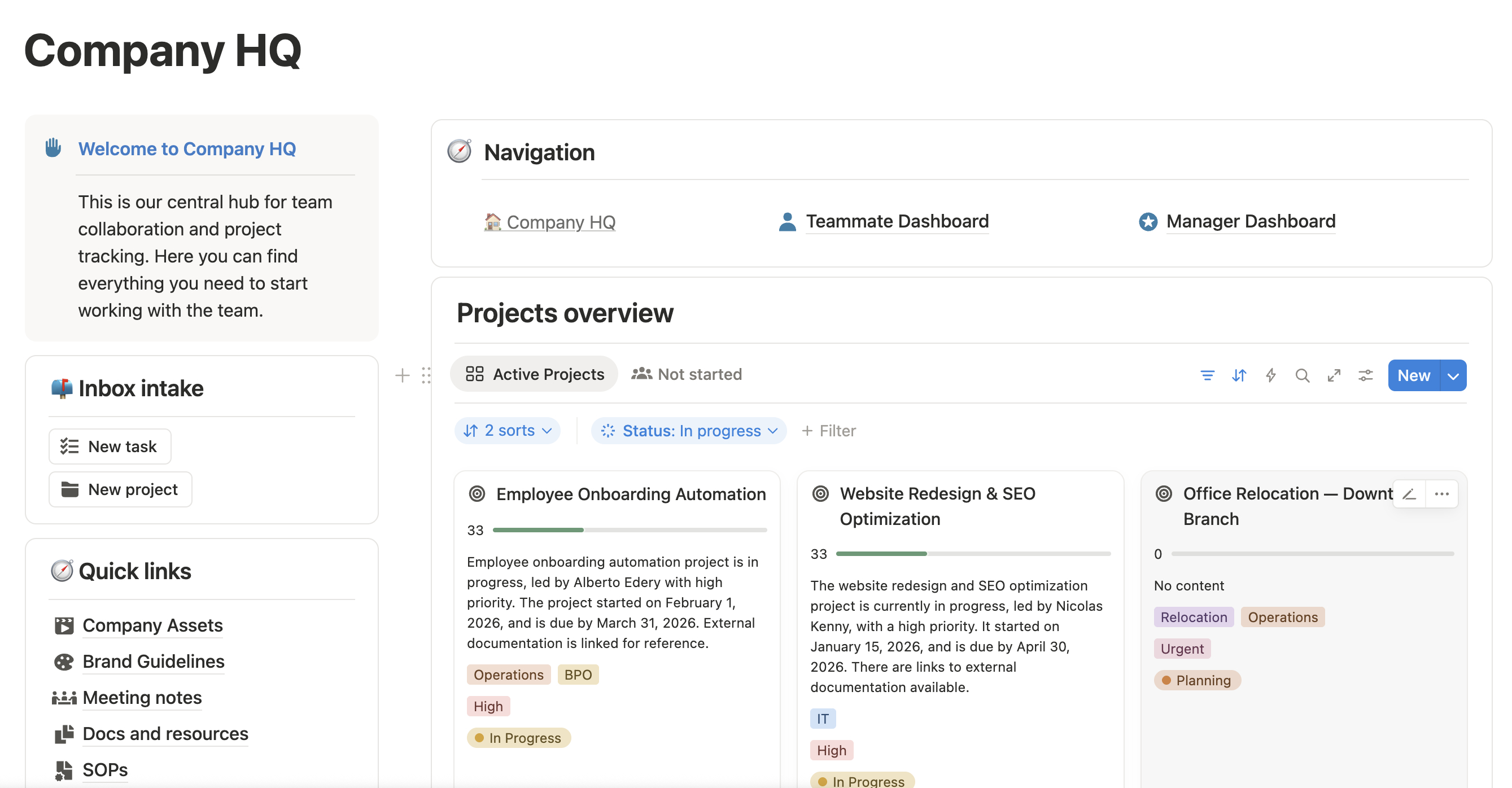
A centralized operational workspace
I designed a tailored Notion workspace that brought key operational information into a single system. The workspace provided a structured environment for managing:
- Clients and relationships
- Tasks and follow-ups
- Operational workflows
- Important information and resources
- Recurring activities
- Day-to-day priorities
Rather than functioning as a collection of databases, the workspace was designed as an operating layer for the business.
Workflow automation
The system was connected to the client’s existing tools using automation workflows. This allowed repetitive processes to happen automatically instead of requiring manual updates across multiple platforms.
The automations were designed around the principle:
If a process happens repeatedly, the system should handle as much of it as possible.
This reduced friction between communication, task management, and operational follow-up.
What changed day to day.
The work now runs out of one place. Four things changed:
One place to look
The record of a client sits next to the work being done for them, so there is nothing to reconcile across tools.
Follow-ups that fire on their own
The repeating work runs from the system instead of waiting for him to remember it.
Status he can see
What is open, what is waiting and what is overdue read off the same records, without a weekly tidy-up.
Built around how he works
The structure follows his process. He did not have to learn someone else’s template to use his own business.
What I did on it.
I ran this one end to end, as the operations consultant and the person who built it:
One place to run it from.
Building the Notion workspace took the least time here. Most of the work went into writing down a way of operating that had only ever lived in one person’s head.
The process he follows is the same one he followed before. The system now holds the parts of it he used to carry.
A system earns its place by taking things off your mind.